
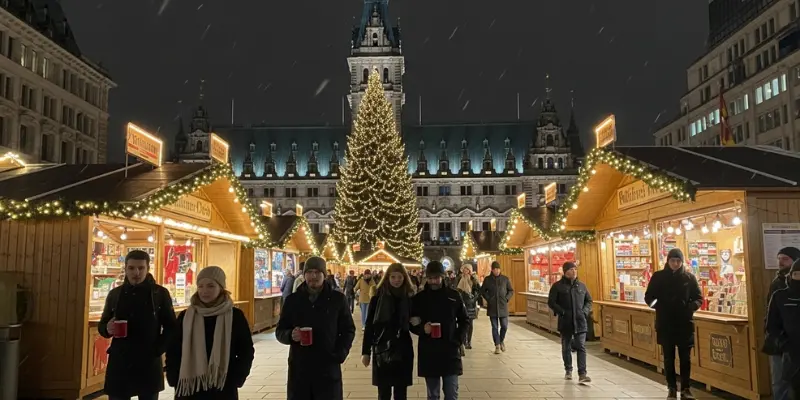
Hamburg Germany Christmas Markets 2026
If you are planning a Christmas holiday in Hamburg, the city can feel a little magical from the very first evening. The festive lights around Rathaus square, the smell of roasted almonds and warm mulled wine (Glühwein) drifting through the cold air, and the rows of wooden Christmas stalls across the historic city center make the whole place feel welcoming even when winter temperatures drop close to freezing. This is why many travelers consider Christmas in Hamburg one of the most atmospheric winter experiences in northern Europe.
What makes the experience even better is the variety of Hamburg Germany Christmas markets spread across the city. Hamburg hosts more than 20 Christmas markets, ranging from traditional historic squares to lakeside markets and neighborhood winter festivals. If you are searching for the best Christmas markets in Hamburg, the most famous ones to start with are Rathausmarkt Christmas Market, the scenic Jungfernstieg White Christmas Market, the cozy Winterwald Market, and the historic St. Petri Christmas Market. These markets capture the essence of the German Christmas market tradition with festive lights, handcrafted decorations, seasonal foods, and a lively holiday atmosphere.
In this Hamburg Christmas market guide, you will discover the best Christmas markets Hamburg has to offer, the festive foods locals and travelers love, practical travel tips, and helpful planning advice for winter travel in Germany. Whether you are visiting for a weekend or planning a longer Christmas holiday in Hamburg, this guide will help you experience the markets the way locals and seasoned travelers do.
Quick Overview: Hamburg Christmas Markets at a Glance
If you are visiting the Hamburg Christmas markets, one of the first things you will notice is just how many there are. Depending on how they are counted, the city hosts around 20 to 30 Christmas markets, making it one of the most festive winter destinations in northern Germany. Each market has its own atmosphere, which means you can easily explore several of them during the same trip without feeling like you are repeating the same experience.
The typical Hamburg Christmas market season begins in late November and runs until December 23, although a few smaller neighborhood markets may open earlier for Advent or operate only on specific weekends. The largest and most famous markets follow the main schedule and usually open daily from late morning until the evening.
Another advantage for travelers is that many of the central Hamburg Christmas markets are located close together. Several of the most popular ones sit within the historic city center between Hamburg Central Station, Mönckebergstraße, Rathaus square, and Jungfernstieg, which means you can walk between them in about 15 to 20 minutes. This makes it surprisingly easy to visit multiple markets in one evening.
You will also find that the Christmas markets in Hamburg Germany come in different styles. Some are traditional historic markets set in beautiful squares, others sit beside the water as lakeside markets with scenic winter views, and many smaller ones feel like local neighborhood festivals where residents gather for food, drinks, and festive entertainment.
Hamburg Christmas Market Dates And Opening Hours
If you are planning to explore a Hamburg Germany Christmas market, the good news is that most of them follow a fairly predictable seasonal schedule each year. In general, the Hamburg Christmas market season begins in late November and runs until December 23, just before Christmas Eve. This means travelers visiting the city during the final weeks of the year will almost certainly find several markets open across the historic center.
Many of the most famous Christmas markets in Hamburg Germany operate within this timeframe. For example, the popular Rathausmarkt Christmas Market, located in front of Hamburg’s City Hall, usually runs from November 24 to December 23. Other well-known markets such as Winterwald, Spitalerstraße, and the lakeside Jungfernstieg market typically open around the same period.
Daily Hamburg Christmas market opening hours are also quite consistent. Most markets open around 11:00 in the morning and close around 21:00 in the evening, giving visitors plenty of time to browse the stalls, enjoy festive lights, and try seasonal food. In some locations, especially where food and drink stalls are popular, vendors may continue serving visitors until 23:00.
Because each market sets its own timetable, the exact Hamburg Christmas market schedule can vary slightly from year to year. Before visiting a specific market, it is always wise to check the latest dates and opening hours so you can plan your evening around the busiest and most festive times.
Map And Walking Route of the Main Hamburg Christmas Markets
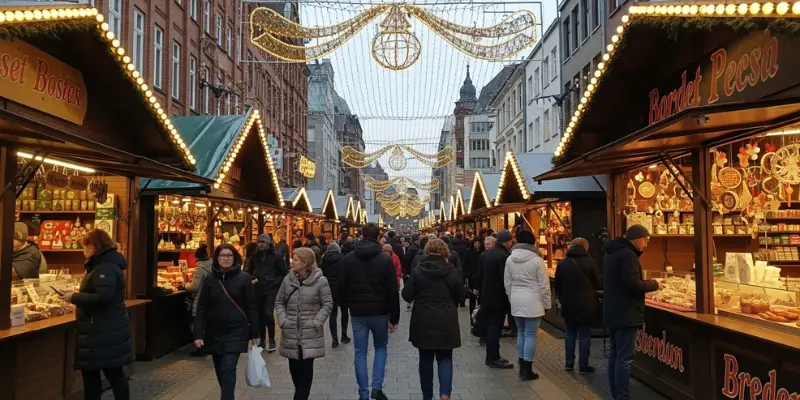
One of the best things about visiting the Hamburg Germany Christmas market scene is how close many of the main markets are to each other. In the historic center of the city, several of the most famous markets sit within comfortable walking distance, which means you can easily explore multiple festive squares in a single afternoon or evening.
A simple route begins at Hamburg Central Station (Hamburg Hauptbahnhof), the city’s main transport hub. From here, most travelers naturally walk toward the shopping streets of the old town, where the first market appears along Spitalerstraße, one of the busiest shopping streets in the city. This market blends festive stalls with decorated storefronts, creating a lively introduction to the Hamburg city center Christmas markets.
Continuing along the same direction, you will soon reach Winterwald Market at Gerhart-Hauptmann-Platz, a cozy “winter forest” themed market decorated with pine branches and fairy lights. Just a few minutes further stands the charming St. Petri Christmas Market, located beside one of Hamburg’s oldest churches.
From here, it is only a short walk to the famous Rathausmarkt Christmas Market, set directly in front of Hamburg’s impressive City Hall. Finally, if you continue toward the waterfront, you will reach the beautiful Jungfernstieg Christmas Market, located beside the Binnenalster lake.
Most of these Hamburg Christmas market map highlights sit within 15 to 20 minutes walking distance of each other, which makes exploring several markets in one evening both easy and enjoyable.
Best Christmas Markets in Hamburg (Complete Guide)
When people talk about a hamburg germany christmas market, they are usually not referring to just one place. The city hosts many festive markets scattered across historic squares, lakeside promenades, and lively neighborhoods. Some feel traditional and cozy, others are modern or even a little unconventional. What makes Hamburg special is that several of the most famous Christmas markets in Hamburg Germany sit close together in the city center, which means you can easily explore multiple markets in a single evening.
Below are some of the most popular and memorable markets visitors experience during Christmas in Hamburg. Each one has its own atmosphere, food stalls, and festive traditions.
Rathausmarkt Christmas Market (Historic Market)
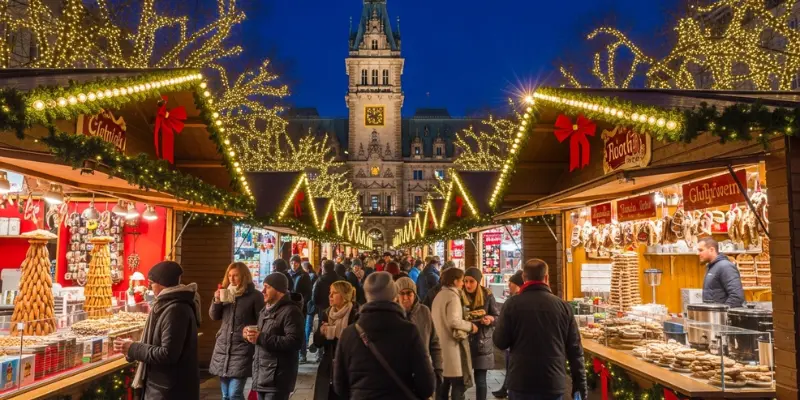
The Rathausmarkt Christmas market is often considered the heart of the Hamburg Christmas markets. It takes place directly in front of the grand Hamburg City Hall, a historic building whose tower and architecture create a dramatic backdrop for the festive stalls. Standing here in the evening, with lights glowing around the square and the scent of roasted almonds drifting through the air, you start to understand why this market is so famous.
The market usually features around 80 to 100 stalls, arranged neatly across the square. Many of them sell traditional crafts such as handmade toys, Christmas decorations, candles, and small wooden gifts that travelers often bring home as souvenirs. Mixed between the shopping stalls are plenty of food vendors offering classic German Christmas market treats like bratwurst sausages, sweet pastries, roasted nuts, and steaming cups of mulled wine.
One of the most unusual attractions here is the Flying Santa Claus show, which takes place several times each evening. At 16:00, 18:00, and 20:00, Santa appears above the market in a sleigh that glides through the air across the square. It is a playful performance that both children and adults gather to watch.
Another charming feature is the vintage carousel, which spins slowly beside the stalls and adds to the old-fashioned festive feeling. Because of the lights and decorations, many visitors say the Roncalli Christmas market looks especially beautiful after sunset when the square begins to glow.
Jungfernstieg Christmas Market (White Magic Market)
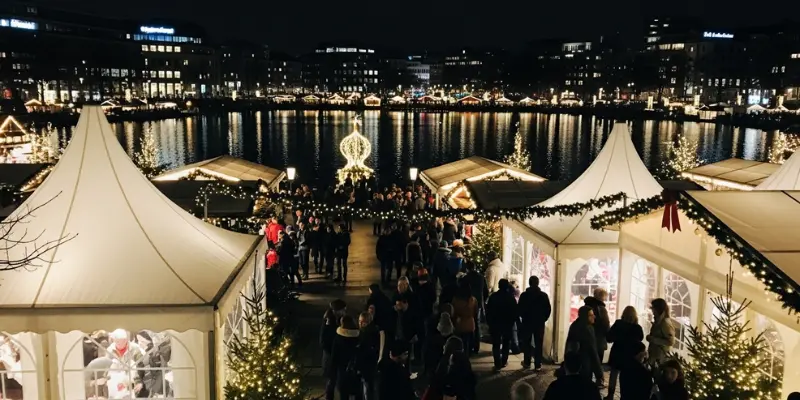
Along the edge of the Binnenalster lake you will find the elegant Jungfernstieg Christmas market, often called the White Christmas Market Hamburg or “White Magic.” Compared with the traditional wooden stalls seen in other markets, this one stands out because its booths are set up in bright white tents, giving the entire market a modern and slightly magical appearance.
The setting is part of what makes this market special. The stalls stretch along the lakeside promenade, and at night the festive lights reflect across the water of the Binnenalster. With the city buildings glowing in the background, the scene feels almost cinematic.
Visitors wandering through the Jungfernstieg Christmas market will find stalls selling crafts, handmade jewelry, winter accessories, and seasonal decorations. Some vendors offer more stylish or designer goods compared with the more traditional markets in the city, which means you may notice that certain items are slightly more expensive.
The lakeside setting also allows for a few unusual activities. During the Christmas season, small boats sometimes offer short rides across the lake, and a decorated Christmas tree can often be seen standing on a small platform out on the water. All together, the market creates one of the most scenic experiences among the best Christmas markets Hamburg has to offer.
St. Petri Christmas Market
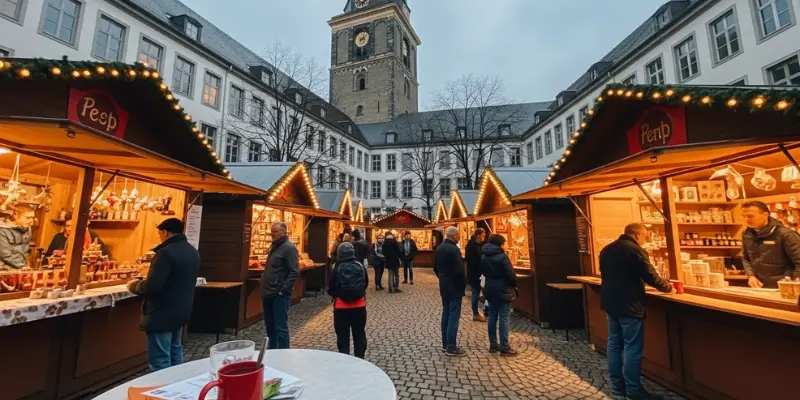
Tucked beside one of the oldest churches in the city is the charming St Petri Christmas market, a small but memorable Hamburg church Christmas market. The stalls are arranged around the courtyard of St. Petri Church, creating a cozy and slightly quieter atmosphere compared with the larger markets nearby.
Many visitors stop here while walking between markets because it feels a little more intimate. Wooden stalls sell festive food, hot drinks, and handmade decorations. Of course, you will still find the essentials of any German festive market: glühwein, sweet pastries, and grilled sausages.
One feature that makes this market particularly interesting for families is a set of traditional fairy-tale displays. Small animated scenes inside glass cases show characters from classic stories such as Little Red Riding Hood. Even though the displays are simple, children often stand watching them with fascination.
Visitors can also climb the St. Petri church tower, which provides a fantastic view over the surrounding historic center and nearby markets. The tower entrance costs about €5 for adults and €2.50 for children, making it an affordable way to see Hamburg from above. From the top you can even look down toward the busy Rathausmarkt Christmas market.
Winterwald Christmas Market
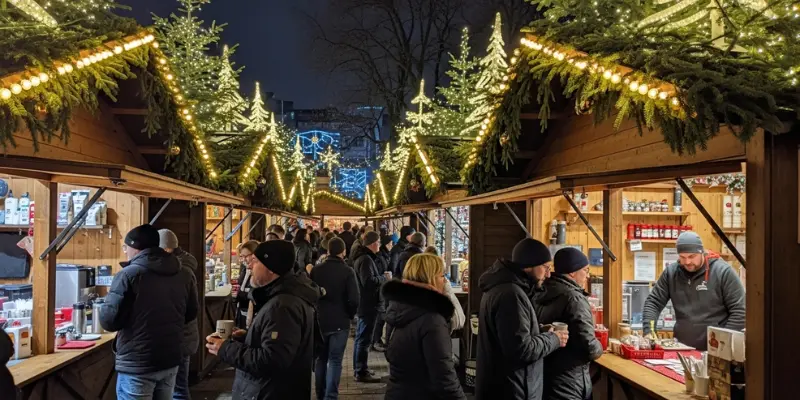
The Winterwald Christmas market at Gerhart-Hauptmann-Platz feels almost like stepping into a small forest in the middle of the city. The name literally means “winter forest,” and the market designers lean heavily into this theme.
Wooden stalls are decorated with pine branches, Christmas trees, and strands of warm fairy lights. The decorations give the impression of a forest clearing surrounded by glowing market stalls. Even if there is no snow on the ground, the atmosphere still feels distinctly wintry.
During the day the market is pleasant and relaxed, but locals often say the Winterwald Hamburg market becomes much more lively after dark. As evening arrives and the lights switch on, groups of friends gather around the stalls for drinks and conversation. The warm glow of the lights against the dark winter sky creates a cozy environment that many travelers find memorable.
Because of its festive setting and central location, this market is often included in walking routes through the Hamburg city center Christmas markets.
Spitalerstraße Christmas Market
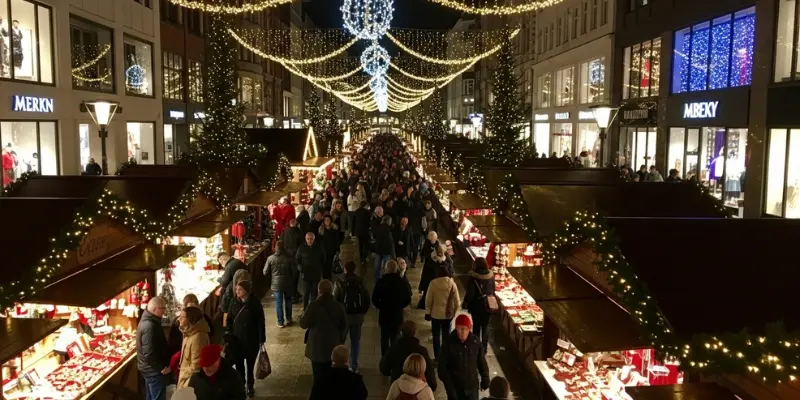
Running along one of Hamburg’s busiest shopping streets, the Spitalerstraße Christmas market blends festive stalls with the surrounding stores and department shops. Instead of being located in a single square, the stalls stretch along the center of the pedestrian street, creating a lively corridor of lights and decorations.
This market is especially popular for Christmas shopping in Hamburg. Visitors can browse both the market stalls and the nearby stores at the same time. Many of the vendors sell handmade gifts, winter clothing, and traditional decorations, making it a convenient stop for travelers looking for souvenirs.
Food stalls serve familiar German Christmas market snacks, including grilled sausages, sweet pastries, roasted nuts, and hot drinks such as mulled wine or hot chocolate. Because the market sits in the middle of a shopping district, it is often busy with both tourists and local residents doing their holiday shopping.
For travelers exploring the hamburg germany christmas market scene, Spitalerstraße is usually one of the first markets encountered when walking from the central train station toward the historic city center.
Santa Pauli Christmas Market
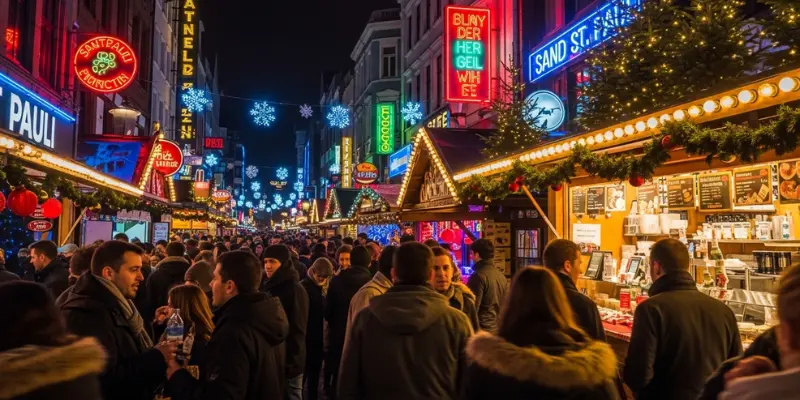
Not every Hamburg Christmas market follows the traditional festive style. In the St. Pauli district near the famous Reeperbahn entertainment area, the Santa Pauli Christmas market offers something very different.
Often described as the city’s most unusual holiday market, Santa Pauli mixes Christmas stalls with the nightlife energy of the surrounding neighborhood. Bright lights, music, and large crowds create an atmosphere that feels closer to a street festival than a traditional winter market.
You will still find food stalls and hot drinks here, but some vendors sell novelty gifts or unusual products that reflect the district’s edgy personality. The market sometimes features live music performances, and the square becomes particularly lively late in the evening.
While it may not suit every traveler, the Santa Pauli Christmas market shows how diverse the Christmas markets in Hamburg Germany can be. Some visitors come simply out of curiosity, while others enjoy the energetic atmosphere that makes this market completely different from the more traditional ones in the historic center.
Traditional Food to Try at Hamburg Christmas Markets
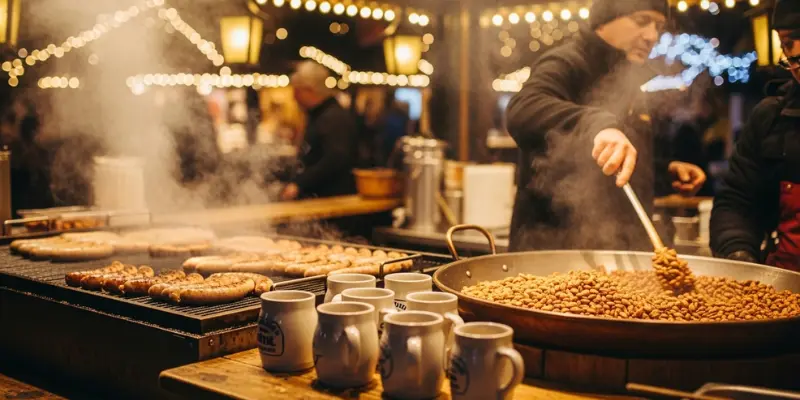
One of the most memorable parts of visiting a hamburg germany christmas market is the food. Even if you arrive simply to admire the lights or browse the stalls, the smell of warm spices, roasted nuts, and grilled sausages quickly pulls you toward the nearest food stand. Across the Christmas markets in Hamburg Germany, the menus follow a tradition that has been part of German winter markets for centuries.
Perhaps the most famous drink you will encounter is glühwein, the classic mulled wine that warms visitors on cold winter evenings. Vendors heat red wine together with spices such as cinnamon, cloves, and citrus peel, creating a sweet and aromatic drink that has become synonymous with German Christmas market food. A typical cup of glühwein Hamburg costs around €4 to €6, depending on the market and the type of wine used.
When ordering glühwein, you may notice that the price includes an extra charge for the mug. This is a deposit system used at many Christmas market stalls. Visitors pay a small additional amount for the mug, which can be returned later to receive the money back. Many travelers decide to keep the mug instead, since the decorated cups often make charming souvenirs from the Christmas market snacks experience.
For something more filling, try a freshly grilled bratwurst, one of the most popular foods in German festive markets. The sausage is usually served inside a bread roll with mustard, making it a simple but satisfying street meal. At most Hamburg Christmas markets, a bratwurst typically costs about €4 to €5.
Sweet treats are just as important as the savory ones. One snack you will smell long before you see it is roasted almonds, slowly caramelized in large pans. The warm sugar coating gives them a sweet crunch that makes them irresistible while walking between market stalls. A small bag usually costs around €3 to €4.
Another traditional dessert found at many markets is Schmalzkuchen, a plate of small fried dough balls dusted with powdered sugar. These bite-sized pastries are warm, soft, and slightly crispy on the outside. Visitors often share them while standing around the food stalls with a hot drink in hand.
Alongside these classics, many stalls also offer hot chocolate, pastries, and other seasonal Christmas market snacks, ensuring that every visitor can find something comforting to enjoy while exploring the festive streets of Hamburg.
Things to Do in Hamburg During Christmas (Beyond the Markets)
While exploring a hamburg germany christmas market is the highlight of winter in the city, there are many other experiences that make a Christmas trip to Hamburg even more memorable. In fact, many travelers like to spend their mornings visiting attractions and sightseeing before heading to the festive markets in the afternoon and evening.
One of the best places to start is St. Petri Church, one of the oldest churches in the city. Visitors can climb the St. Petri church tower, which offers a fantastic panoramic view over the historic center and nearby markets. From the top you can see rooftops, church spires, and even the busy Rathausmarkt Christmas market below. Entry to the tower costs about €5 for adults and €2.50 for children, making it an affordable way to experience Hamburg from above.
Another attraction that many visitors love is Miniatur Wunderland, the famous miniature world exhibition located in the historic warehouse district. This incredible museum features enormous model landscapes, trains, airports, and cities built in stunning detail. It is considered the largest model railway exhibition in the world and is one of the most visited attractions in Germany.
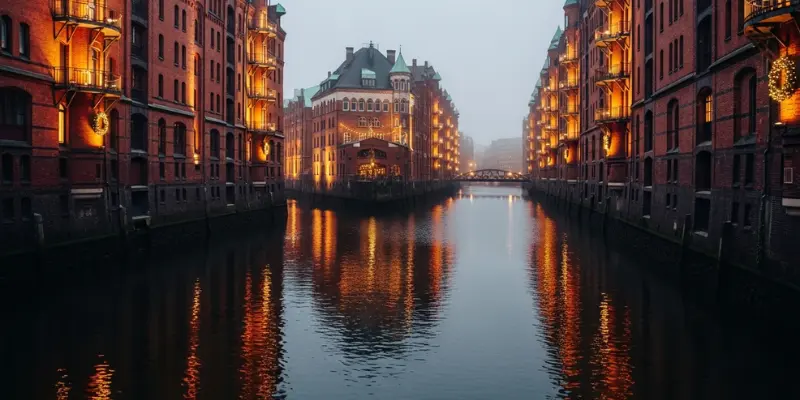
Nearby you will also find Speicherstadt, Hamburg’s beautiful UNESCO-listed warehouse district. The red-brick buildings, narrow canals, and historic bridges create a dramatic setting that feels especially magical during winter evenings when the lights reflect in the water.
For something a little different, visit Europa Passage, a large shopping mall in the city center. Inside you will find a unique attraction a giant indoor spiral slide that connects several floors of the building. It has become a fun and unexpected activity for visitors exploring the downtown area.
Chocolate lovers should not miss Chocoversum, Hamburg’s interactive chocolate museum. Here visitors can learn how chocolate is produced and even create their own custom chocolate bar during the tour.
Finally, one of the most beautiful winter attractions in the city is Christmas Garden Hamburg. This evening light festival transforms a large park into a glowing landscape of illuminated sculptures and artistic light displays. Walking through the garden feels almost like entering a winter fairy tale. Tickets for Christmas Garden Hamburg usually cost around €16.50 to €27.50 for adults, depending on the date and time of entry.
These experiences add another layer to the Hamburg Christmas attractions, allowing travelers to combine festive markets with museums, historic neighborhoods, and winter light shows throughout the city.
How Much Money You Should Budget for Hamburg Christmas Markets
When planning a visit to a hamburg germany christmas market, many travelers wonder how much money they should expect to spend during an evening exploring the stalls. Fortunately, most Christmas markets in Hamburg Germany are relatively affordable, especially compared with restaurants or formal dining experiences.
For food and drinks, visitors typically spend around €15 to €30 per person during a casual visit. This usually covers a warm drink and one or two snacks while wandering between stalls. One of the most popular drinks is glühwein Hamburg, the traditional mulled wine served at almost every market. A cup normally costs around €4 to €6, depending on the stall and the type of wine used.
Food options are also reasonably priced. A classic bratwurst sausage, usually served inside a bread roll with mustard, generally costs about €4 to €5. Sweet treats like roasted almonds or pastries are often sold in small portions costing roughly €3 to €4.
When ordering hot drinks, visitors should be aware of the common mug deposit system used throughout German Christmas market food stalls. Drinks such as glühwein are usually served in special ceramic mugs decorated with festive designs. In addition to the drink price, you will pay a small deposit for the mug. After finishing your drink, you can return the mug to the stall and receive your deposit back. Many travelers choose to keep the mug as a souvenir from the Hamburg Christmas markets.
Besides food and drinks, visitors often spend money on small gifts or decorations. Handmade ornaments, winter accessories, and festive crafts typically cost between €5 and €30, depending on the item. Even a small souvenir can be a charming reminder of your evening exploring the glowing stalls of the hamburg germany christmas market.
Expert Tips for Visiting Hamburg Christmas Markets
If it is your first time visiting the Hamburg Christmas markets, a little planning can make the experience much more enjoyable. The first thing I would say is this: go earlier in the day if you want a calmer atmosphere. Many of the most popular markets, especially Rathausmarkt, become much busier after dark when the lights come on and the evening crowds arrive. That nighttime atmosphere is beautiful, yes, but it can also feel packed, especially if you are trying to take photos, browse slowly, or travel with children.
It is also smart to avoid Saturday evening if possible. This is usually when the markets feel busiest and loudest, and moving between stalls becomes less relaxing. If you want the festive mood without the heaviest crowds, a weekday afternoon or early evening is often a better choice.
Weather matters more than many first-time visitors expect. In December, temperatures in Hamburg are often around freezing or below, and once the sun goes down the cold can feel sharper, especially when you are standing still with a drink or waiting at food stalls. For that reason, wear warm layers, not just one heavy coat. A sweater, insulated jacket, hat, gloves, thick socks, and proper boots will make a huge difference.
And do not underestimate your feet. Comfortable shoes are essential because you will probably walk more than planned and spend a lot of time standing. Some stalls have places to lean or sit, but many do not. Good shoes, warm clothing, and smart timing are really the small things that turn a winter market visit from tiring into genuinely enjoyable.
Where to Stay Near Hamburg Christmas Markets
Choosing the right place to stay can make your visit to the Hamburg Germany Christmas market much easier and more enjoyable. Because many of the most popular Christmas markets in Hamburg Germany are located close together in the historic city center, staying in the right area means you can walk between markets without worrying about long transport journeys.
For most travelers, the best option is to stay near Hamburg’s city center (Altstadt or Innenstadt). This area places you within easy walking distance of several major markets, including the famous Rathausmarkt Christmas market, the Jungfernstieg lakeside market, and the festive stalls along Spitalerstraße. During the Christmas season the streets around the city center are beautifully decorated, so even the walk between markets becomes part of the experience.
Another convenient location is near Hamburg Central Station (Hauptbahnhof). Many visitors arrive here by train, and the station sits just a short walk from several major Christmas markets. Staying nearby also gives you quick access to the city’s public transport network.
If you prefer quieter surroundings, consider hotels near an S-Bahn or U-Bahn station. Hamburg’s train system connects the entire city efficiently, making it easy to reach markets and attractions within minutes.
One hotel mentioned by travelers is Mercure Hotel Hamburg City, which offers a comfortable base slightly outside the busy center. It sits near the Hammerbrook S-Bahn station, only one stop from Hamburg Central Station, allowing visitors to reach the Hamburg Christmas markets quickly while still enjoying a quieter place to rest after an evening exploring the festive stalls.
Perfect 1-Day Hamburg Christmas Market Itinerary
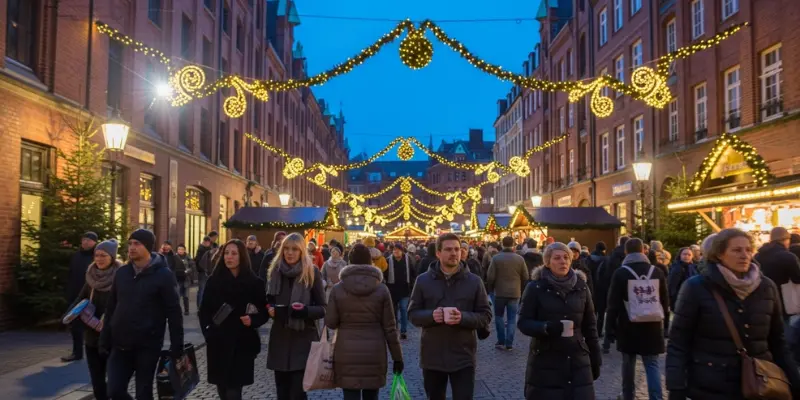
If you only have one evening to explore a Hamburg Germany Christmas market, the good news is that several of the city’s most famous markets are located very close together in the historic center. With a simple walking route, you can experience multiple Christmas markets in Hamburg Germany in a single afternoon and evening.
A convenient place to begin is Hamburg Central Station (Hauptbahnhof). Many visitors arrive here by train, and it sits just a short walk from the first festive stalls. From the station, walk toward the busy shopping street Spitalerstraße, where the first Christmas market usually appears. This lively area is a good place to start your evening with a warm drink or a quick snack while enjoying the decorated shopfronts and market lights.
Continue walking along Mönckebergstraße, one of the main pedestrian streets in the city center. After a few minutes you will reach Winterwald Christmas Market at Gerhart-Hauptmann-Platz. The pine decorations and glowing fairy lights make this market feel like a small winter forest in the middle of the city.
Just a short walk further brings you to the charming St. Petri Christmas Market, located beside the historic church. Many visitors pause here briefly before heading toward the heart of the Christmas celebrations.
Next you will reach the famous Rathausmarkt Christmas Market, set in front of Hamburg’s impressive City Hall. This is often the busiest market in the city, and it becomes especially magical in the evening when the festive lights illuminate the square.
Finally, continue toward the lakeside promenade to visit the beautiful Jungfernstieg Christmas Market beside the Binnenalster lake. By this time the evening lights will reflect across the water, creating one of the most atmospheric scenes among the Hamburg city center Christmas markets.
History of German Christmas Markets
Long before modern cities filled their squares with festive lights and wooden stalls, the tradition of the German Christmas market had already begun taking shape across Europe. The story goes back several centuries and is deeply connected to winter life in medieval towns.
Early versions of these markets appeared during the Middle Ages, when communities organized winter gatherings where people could buy food, clothing, and supplies before the harsh cold season arrived. These events slowly evolved into seasonal celebrations that combined practical shopping with festive traditions.
By the 17th century, these gatherings had become what Germans call a Christkindlmarkt, meaning “Christ Child Market.” The name reflects the religious roots of the celebration, tied to the Advent season leading up to Christmas. Over time, the markets grew into cheerful community events filled with food stalls, crafts, music, and decorations.
One of the most famous examples is the Nuremberg Christkindlesmarkt, widely considered one of the oldest and most traditional Christmas markets in Germany. Its popularity helped inspire similar markets across the country.
Today, cities like Hamburg continue this centuries-old Christkindlmarkt tradition, blending historic customs with modern festive experiences. When visitors explore a Hamburg Germany Christmas market, they are actually taking part in a tradition that has been bringing people together for hundreds of years.
Hamburg Germany Christmas Markets 2026
Related Posts
Most Easy Trails for Black Forest Hikes Dont Miss in 2026
When I first stepped into the Black Forest region, it was not loud or dramatic…
Baden-Baden Tourist Attractions: 15 Best Places to Visit in 2026
Why Visit Baden-Baden? Nestled at the edge of the Black Forest, Baden-Baden is a charming…