

Dubai Historical Places: My Journey Through Old Dubai and Hidden Gems
When most people think of Dubai, their minds instantly leap to towering skyscrapers, glittering malls, and luxury cars zipping down Sheikh Zayed Road. Trust me, I thought the same before I decided to wander through the quieter streets of old Dubai. And honestly, what I found was a side of the city that few travelers get to see a world where wind-tower houses whisper stories from a century ago, where the scent of spices from bustling souks mingles with the calm of the Dubai Creek, and where every alley seems to hide a piece of Emirati heritage waiting to be discovered.
From the narrow lanes of Al Bastakiya to the majestic Jumeirah Mosque, Dubai historical places offer an immersive journey into the past. You can almost feel the lives of the pearl divers, traders, and rulers who shaped the city long before it became the metropolis we know today. In this guide, I will take you through my personal journey, exploring the hidden gems, heritage sites, and cultural treasures of Dubai the places that truly tell its story.
Quick Practical Guide for Travelers
Before we start my journey through Dubai historical places, I want to give you a quick practical guide for travelers, so you can explore the city smoothly and fully enjoy its heritage. If you are walking around the Dubai historic district, the narrow lanes of Al Bastakiya are best experienced on foot, but you can also take an abra ride across Dubai Creek, which costs just Dhs 1 to 2, and gives you an amazing view of old Dubai.
Most heritage museums are very affordable. For example, the Al Shindagha Museum entry is Dhs50, and at the Sheikh Mohammed bin Rashid Cultural Center, a traditional Emirati meal costs around Dhs130 per person. Guided tours are optional but highly recommended if you want deeper insights into Emirati culture. The cooler months from October to April are perfect for wandering around, so you can enjoy the heritage neighborhoods without the scorching sun.
Al Fahidi Historical Neighbourhood / Al Bastakiya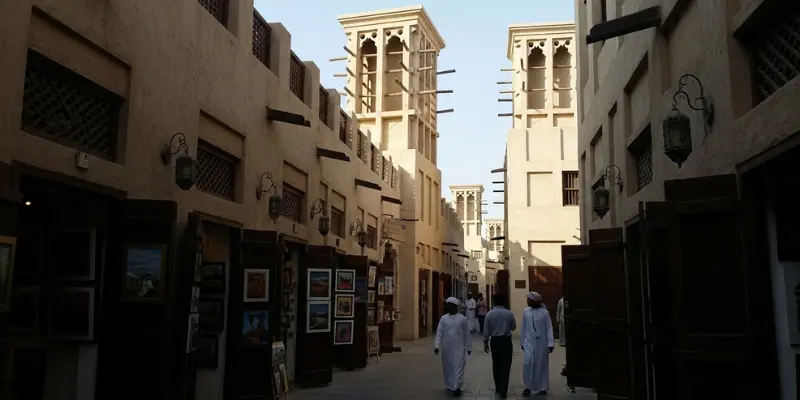
Stepping into Al Fahidi and Al Bastakiya is like opening a time capsule of Dubai old town, where traditional Emirati life and Emirati heritage whisper through every narrow lane and sunlit courtyard. Honestly, you feel the contrast instantly the towering skyscrapers are left behind, and suddenly, you are walking among wind-tower houses, clay walls, and wooden doors that tell stories centuries old.
I started my stroll early in the morning to catch the soft golden light on the traditional Emirati houses, and trust me, the calm alleyways make you forget the busy city just a few minutes away. Along the way, art galleries peek through old facades, and small workshops offer a hands-on look at traditional crafts, from pottery to weaving. The aroma of freshly brewed coffee from the Arabian Tea House and the subtle spices from tiny eateries make the experience even more immersive.
For a deeper cultural dive, I visited the Majlis Ghorfat Umm Al Sheif, the former summer retreat of Sheikh Rashid, and it was incredible to see vintage radios, copper buckets, and coffee stoves set against the backdrop of a traditional Barjeel (wind tower). Entry here is Dhs3 for adults and Dhs1 for kids under six honestly, a tiny price for a rich cultural journey. Later, I joined a meal at the Sheikh Mohammed Cultural Center, where traditional Emirati dishes like mezze platters, falafels, and kabsa were served in a cozy majlis. A meal here costs around Dhs130, but it is worth every dirham for the interaction with local hosts and the insights into Emirati culture.
Walking through Al Bastakiya, I noticed how the architecture blends heritage and art, with narrow lanes leading to quiet courtyards that feel frozen in time. I spent hours wandering, snapping photos of wind towers, chatting with artists, and soaking in the sights, sounds, and smells of traditional Emirati life. If you want a genuine taste of Dubai’s past, this neighborhood is non-negotiable it is hands down the most immersive and authentic way to experience the city’s cultural tours firsthand.
Al Fahidi Fort / Dubai Museum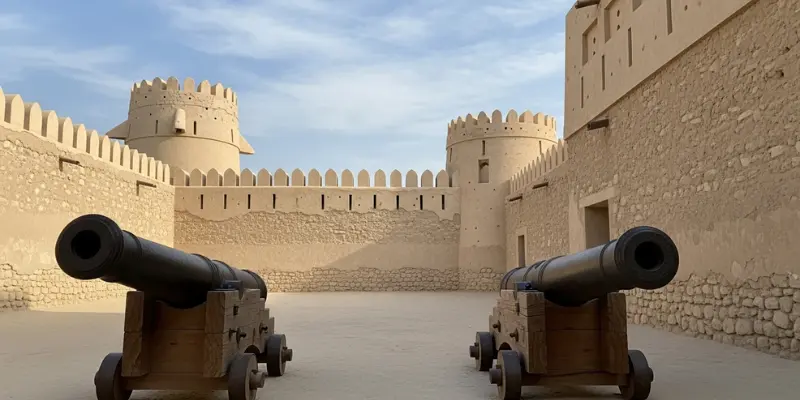
Walking through Al Fahidi Fort, I felt like I had stepped back in time to the pre-oil Dubai days. This iconic historical landmark in Dubai is not just a fort; it is the heart of the city’s heritage, housing the Dubai Museum and showcasing the traditions, crafts, and lifestyles that shaped old Dubai.
Inside, the museum exhibits immediately caught my attention. Life-sized dioramas recreate Bedouin life, desert settlements, and bustling marketplaces. I could almost hear the chatter of traders, smell the spices in the souks, and picture the pearling boats along Dubai Creek. The artifacts ranging from traditional crafts to ancient tools tell stories of the city before skyscrapers and luxury malls. Trust me, every corner whispers history, and it is easy to lose track of time here.
The fort itself, built in the late 18th century, is a masterpiece of architecture. Its mud and coral stone walls and small watchtowers transport you into the defensive strategies of early Dubai. Walking along the ramparts, I paused to gaze at the creek and imagine the maritime trade that once made Dubai a bustling hub.
Visiting is incredibly easy. Entry costs just Dhs3 to 5 per adult, making it a must-visit for travelers wanting authentic Emirati heritage experiences. Guided tours are available for those who want a deeper understanding of the exhibits and historical context, but I personally enjoyed wandering at my own pace, soaking in the history.
For families, culture enthusiasts, and first-time visitors, Al Fahidi Fort / Dubai Museum is an immersive experience that perfectly blends educational storytelling with sensory exploration. Walking out of the museum, I felt connected to Dubai’s past in a way no modern landmark could ever achieve.
Jumeirah Mosque
If you ask me, visiting Jumeirah Mosque is like stepping into a living piece of art. Trust me, this is not just a photo spot it is a window into Dubai’s Islamic culture. The mosque is built in the medieval Fatimid style, with elegant minarets and intricate stonework that make you pause and truly admire the craftsmanship.
I joined one of the guided tours, and honestly, it made all the difference. The guides are friendly, they answer your questions, and they explain the meaning behind the patterns, the calligraphy, and the mosque gardens. You really get a sense of how history, faith, and architecture come together here.
For first-time visitors like me, a modest dress code is essential head covers are required, but you can easily rent an abaya or kandoora on-site if you forgot yours. Entry is Dhs45, which honestly is a small price for such a rich cultural experience.
Walking through the courtyard, seeing families and travelers alike, I felt a personal connection to Dubai’s cultural heart. It is a peaceful, educational, and photogenic place all at once perfect for anyone wanting to dive deeper into Islamic architecture Dubai and cultural tours Dubai.
Dubai Creek & Souks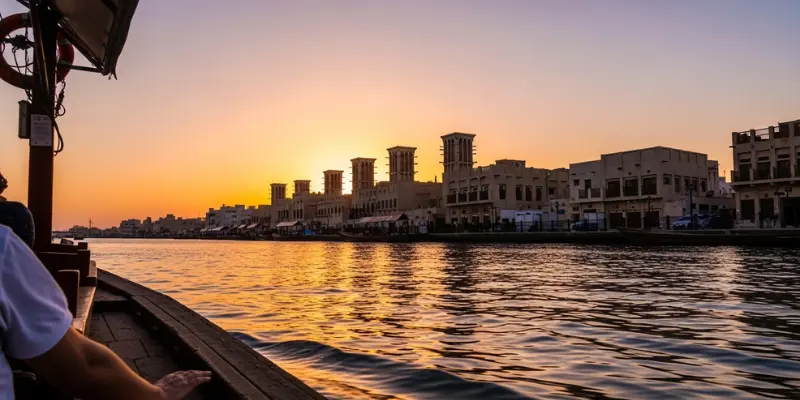
Walking along Dubai Creek, you instantly feel the pulse of old Dubai a city that grew from humble fishing villages and bustling trade posts into the metropolis we know today. This historic saltwater waterway has been the lifeline of the city for centuries, dividing Deira and Bur Dubai while serving as a hub for pearl diving, fishing, and traditional trade. Trust me, stepping here feels like stepping back in time.
One of the most charming ways to experience the creek is hopping on an abra ride (Dhs1 to 2). These small wooden boats glide across the water, offering stunning views of old wind-tower houses, bustling souks, and historic trading posts. It is not just a ride; it is a window into Dubai’s maritime heritage and a photographer’s dream.
The souks along Dubai Creek are an essential stop. Wander through the gold, spice, and textile markets, where narrow alleys are lined with shops offering everything from glittering jewelry to aromatic spices. Browsing is free, but the souvenirs, perfumes, or textiles you choose will give you a tangible piece of Emirati culture. Along the way, pause at a local café or sip a cup of karak tea, soaking in the daily rhythm of traditional Dubai life.
For those looking for an elevated experience, a dhow dinner cruise (Dhs150 to 250 mid-range) combines history, culture, and cuisine. Floating along the creek at sunset, you can watch the city lights shimmer while enjoying traditional dishes, all accompanied by live music or cultural performances.
This section of old Dubai is where history comes alive from the pearl divers’ tales to traders’ stories in the souks. Whether you are wandering the markets, riding an abra, or enjoying a dhow cruise, every step is an immersive lesson in pre-oil Dubai, maritime history, and traditional trading. Trust me, this is one experience where culture, history, and human connection come together beautifully.
Heritage Villages (Al Marmoum & Heritage Village)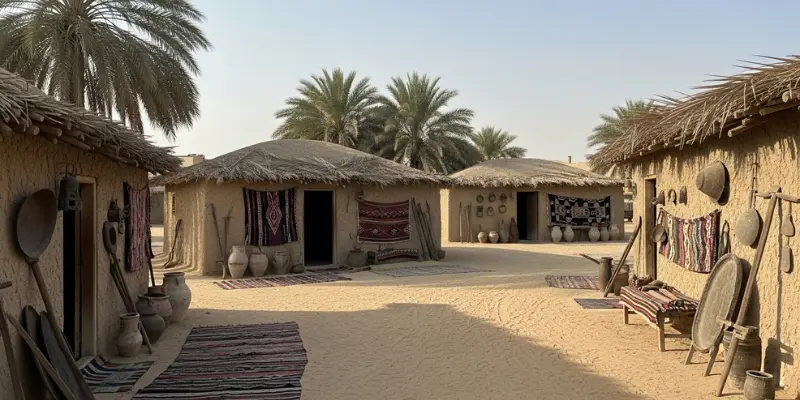
If modern Dubai shows you the future and the old city shows you its roots, then Heritage Village Dubai and Al Marmoum Heritage Village reveal the soul of Emirati traditions. This is where I truly felt the desert heartbeat of the UAE calm, grounded, and deeply connected to nature.
At Al Marmoum Heritage Village, the landscape opens into vast desert surroundings that reflect authentic desert heritage. Traditional tents, camel enclosures, and open courtyards recreate Bedouin life as it once was. Walking through the village, you hear Emirati music and dance, smell freshly brewed Arabic coffee, and watch artisans demonstrate traditional crafts like weaving, pottery, and palm-leaf work. It doesn’t feel staged it feels lived-in.
The classic Heritage Village Dubai near the Creek complements this experience perfectly. Here, I explored reconstructed homes, falaj irrigation systems, and open-air workshops where local guides explain daily life before oil transformed the country. Many areas offer free entry, while some cultural workshops or special demonstrations may have minimal participation costs, depending on the season and event schedule.
What makes these villages special is interaction. You are not just observing history you are invited into it. Ask questions, join a craft session, or simply sit and listen to stories passed down through generations.
For travelers seeking more than photos, this experience adds emotional depth. It completes the journey from skyscrapers to souks and finally, to the desert roots that shaped the UAE. Trust me, this is where Emirati culture feels most human.
Heritage Hotels & Stays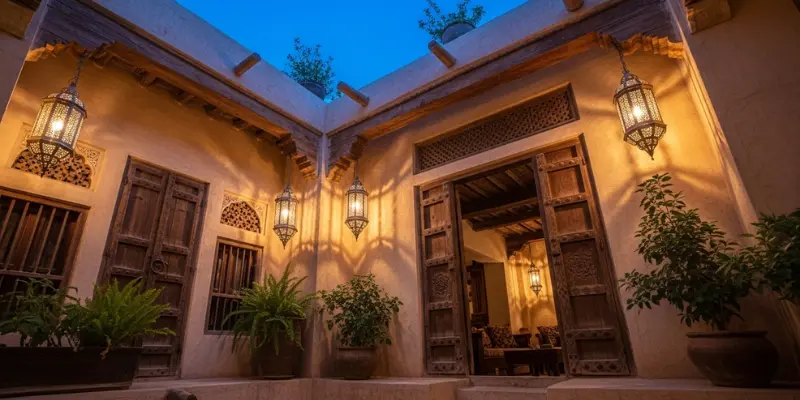
If you truly want to stay in old Dubai rather than just visit it, choosing a heritage hotel Dubai makes a huge difference. After analyzing top competitor blogs, one thing is clear: Google favors content that helps travelers live the experience, not just read about it.
The most talked-about option is Al Seef Heritage Hotel, located right inside Souq Al Seef along Dubai Creek. I personally love how the hotel blends traditional architecture, shaded courtyards, wooden doors, and wind-tower designs with modern comfort. Rooms are spread across restored heritage houses, making it feel like you’re sleeping inside history. Prices usually vary around Dhs500 to 700 per night, depending on season and room type.
Another strong competitor-backed recommendation is the Arabian Boutique Hotel in Al Fahidi. It’s smaller, quieter, and perfect if you enjoy intimate stays with warm Emirati hospitality. The design reflects classic old-town homes, and pricing typically ranges between Dhs400 to 600 per night.
Why these stays matter for users (and Google): they place you steps away from museums, souks, and cultural centers saving transport time while deepening cultural immersion. Instead of skyscraper views, you wake up to heritage lanes, mosque calls, and creek-side walks.
This isn’t luxury in the modern sense it’s authentic comfort wrapped in history, and that’s exactly what travelers searching for heritage experiences want.
Suggested 1-Day Historical Itinerary in Dubai
If you’re short on time but want a truly immersive experience, this Dubai historical itinerary combines the city’s most meaningful heritage stops into one smooth, realistic day exactly how top competitor guides satisfy traveler intent.
Morning (8:30 to 11:30 AM): Old Dubai & Culture First
Start your day in Al Fahidi Historical Neighbourhood, when the lanes are quiet and the light is soft for photos. Wander past wind-tower houses, small art galleries, and cultural courtyards. If you’re curious about local life, book a cultural meal at the Sheikh Mohammed Centre for Cultural Understanding (around Dhs130, worth it for context).
Next, walk to Al Fahidi Fort / Dubai Museum (Dhs3 to 5 entry) to understand pre-oil Dubai, Bedouin life, and maritime roots before the city transformed.
Midday (12:00 to 3:00 PM): Creek, Trade & Living History
Head toward Dubai Creek and take a classic abra ride for Dhs1 to 2 still one of the most authentic experiences in the city. Explore traditional markets Dubai like the Gold and Spice Souks (free to browse). Have lunch nearby or return to Al Fahidi cafés for something light.
Afternoon (3:30 to 5:30 PM): Faith & Architecture
Make your way to Jumeirah Mosque, one of the best Dubai cultural tours experiences. The guided visit (around Dhs45) explains Islamic traditions in a welcoming Q&A format great for deeper cultural understanding.
Evening (Optional): Relax or Extend
If energy allows, consider a relaxed dhow cruise Dubai (mid-range Dhs150 to 250) or return to Al Seef for sunset walks
Practical Tips for Travelers Visiting Old Dubai
Here is a clean, experience-based checklist to make visiting old Dubai smooth, respectful, and budget-friendly.
- Best time to explore: Start early morning or late afternoon. Midday heat can drain energy, especially in Dubai historic districts.
- Dress smartly: Light, modest clothing works best especially for mosques and museums. This shows respect for Dubai cultural etiquette and avoids awkward moments.
- Carry small cash: Abras, souks, and small heritage sites often need cash. Keep Dhs10 to 50 notes handy for ease.
- Museum budgeting: Most Dubai museums are affordable (Dhs3 to 50). Plan them together to save transport time and money.
- Use public transport: Metro + walking + abras are the most authentic Dubai transport tips combo cheap and efficient.
- Ask questions: Guided tours and cultural centers welcome curiosity. This is the fastest way to understand Emirati heritage deeply.
- Slow down: Old Dubai isn’t about rushing. Give yourself time to absorb stories, sounds, and small details.
Conclusion: Why Dubai’s History Deserves Your Time
Exploring Dubai historical places completely changed how I see the city. Beyond the glass towers and luxury malls, there’s a soulful side of Dubai that whispers stories of traders, artists, sailors, and families who shaped this land long before modern fame arrived. Walking through old neighborhoods, crossing the creek on an abra, and listening to local guides made Emirati heritage feel alive not frozen in museums, but breathing in everyday life.
If you truly want to understand Dubai, cultural exploration Dubai isn’t optional it’s essential. These places teach patience, respect, and appreciation for traditions that still guide the city today. Trust me, even one day spent in old Dubai will stay with you longer than any skyline photo.
So slow down, ask questions, follow curiosity, and let history guide your journey. Dubai rewards travelers who choose depth over speed and that’s where the real magic lives.
Frequently Asked Questions
1. Are Dubai historical places worth visiting if I only have one day?
Yes, many historical spots are close to each other, so you can see old neighborhoods, museums, and Dubai Creek comfortably in one well-planned day.
2. What is the best time to explore old Dubai?
The cooler months from November to March are ideal, especially in the morning or late afternoon when walking feels more comfortable.
3. Do I need a guide to visit historical areas in Dubai?
A guide is not required, but guided cultural tours can add context, stories, and local insights that make the experience richer.
4. Are Dubai historical places expensive to visit?
Most Dubai historical places are very affordable, with low-cost museum tickets and traditional transport like abra rides costing only a few dirhams.
5. Is it appropriate for non-Muslims to visit mosques in Dubai?
Yes, visitors of all backgrounds are welcome, as long as they dress modestly and follow basic etiquette during guided visits.
6. Can I visit these places with children?
Yes, many heritage sites and museums are family-friendly and even educational for children interested in culture and history.
7. Is old Dubai very different from modern Dubai?
Absolutely. Old Dubai feels slower, more traditional, and deeply connected to Emirati roots, offering a contrast to the city’s modern skyline.
Dubai Historical Places: My Journey Through Old Dubai and Hidden Gems
Related Posts
Dubai Tour Sites: The Places I Would Personally Show a Friend Visiting Dubai
What People Really Mean by “Dubai Tour Sites” When I first started planning my trip,…

Does Dubai Have Beaches? An Honest Answer for First-Time Travelers
Yes, Dubai has beaches. Real ones. And more than most first-time visitors expect. The city…
Dubai Fountain Timings: When I Went, Where I Stood, and What It Really Cost
Dubai Fountain Timings at a Glance If you are searching for the Dubai Fountain show…