

Edinburgh, Scotland: The Complete 2026 Travel Guide
Edinburgh, Scotland sits on the east coast of the country, about 400 miles north of London and roughly 45 miles east of Glasgow. It’s the capital of Scotland, home to just over half a million people, and the country’s most visited city by a wide margin. Most first-time visitors come for three things: a castle perched on an extinct volcano, an Old Town that still looks like it did two centuries ago, and a festival calendar so packed that the population effectively doubles every August.
This guide covers all of it. Where the city actually is, what’s worth your limited time, where to base yourself, when to go, how to get there, and a full three-day plan you can follow step by step.
Edinburgh at a Glance
- Country: Scotland, United Kingdom
- Population: around 506,000 in the city proper, over 900,000 across the wider region
- UNESCO status: Old Town and New Town, World Heritage Site since 1995
- Currency: British Pound (GBP)
- Language: English, with Scots and Scottish Gaelic also spoken
- Visitor levy: a 5% charge added to overnight accommodation stays, in effect since October 2025
- Time zone: GMT (UTC+0), moving to BST (UTC+1) in summer, same as the rest of the UK
Where Is Edinburgh, Scotland?
Edinburgh is the capital of Scotland, sitting on the country’s east coast along the Firth of Forth, the estuary where the River Forth meets the North Sea. It’s in the Lowlands, not the Highlands, which surprises some visitors expecting misty mountains right outside the city. Those come later, on a day trip or a longer Highlands leg of the journey.
Geographically, Edinburgh and Glasgow are Scotland’s two major cities, separated by less than an hour on the train, but they feel like different countries. Glasgow is Scotland’s largest city and its industrial and creative center. Edinburgh is the political and historical one, home to the Scottish Parliament, the national museums, and the older money. If you’re only visiting one, Edinburgh is the easier choice for a first trip since almost everything you’ve heard of, the castle, the Royal Mile, the festival, is here rather than there.
Edinburgh is not in England. It’s a two-hour flight or a four-and-a-half-hour train ride north of London, and the border with England sits about 50 miles south of the city.
For context if you’re building a wider Scotland trip, Edinburgh makes a natural starting point rather than a detour. Stirling and its own castle are under an hour away by train, the Highlands begin roughly two to three hours north depending on how far you go, and the Isle of Skye is a full day’s drive but doable as a multi-day add-on. Most itineraries that cover both Edinburgh and the Highlands use Edinburgh as the bookend, flying in and out of its airport while the middle of the trip goes further north.
A Brief History of Edinburgh
Edinburgh’s story starts with its geography. Castle Rock, the hill the castle now sits on, is an extinct volcanic plug, and it’s been fortified in some form since at least the Iron Age. The city grew along the ridge running down from that rock, which is why the Old Town today is a tight, tall, tangled network of closes and wynds rather than a grid. Space was scarce inside the old defensive walls, so Edinburgh built up instead of out, and some of its 16th and 17th century tenements reached ten or eleven stories, early skyscrapers by any real definition.
The New Town came later, and deliberately. By the mid-1700s the Old Town was overcrowded and increasingly unfashionable among Edinburgh’s wealthier residents, so the city held a competition for a planned extension. A young architect named James Craig won it, and construction on the New Town’s elegant grid of Georgian streets and squares began in 1767. The contrast between the two halves of the city, medieval chaos on one side of Princes Street Gardens and orderly Georgian planning on the other, is what earned Edinburgh’s Old and New Towns their joint UNESCO World Heritage listing in 1995.
Edinburgh has carried the nickname “Auld Reekie,” old smoky, since the days when coal fires from thousands of tenement chimneys hung a permanent haze over the city. It’s also been called the “Athens of the North,” partly for its Enlightenment-era intellectual output and partly for the neoclassical architecture, including an unfinished monument on Calton Hill modeled directly on the Parthenon. Edinburgh’s Enlightenment period in the 18th century produced thinkers like David Hume and Adam Smith, and that intellectual reputation stuck. Today the city holds UNESCO City of Literature status, one of the reasons Edinburgh’s literary connections run so deep, from Robert Louis Stevenson and Sir Walter Scott to more recent arrivals like J.K. Rowling, who wrote much of the Harry Potter series in Edinburgh cafes.
The Best Things to Do in Edinburgh
Edinburgh rewards a plan more than most cities its size, mostly because everyone tries to cram the same six attractions into one overwhelmed afternoon. Spread it out and use actual judgment about what’s worth the ticket price and the queue, and the city opens up considerably.
Not everything below deserves equal billing, either. Edinburgh Castle and the Royal Mile are genuinely worth the hype and the crowds. A few other well-marketed attractions are more skippable than their gift shop presence suggests, fine if you have time to spare, not worth cutting something better to fit in. The list below separates the two, organized by what kind of trip you’re taking rather than a flat ranked countdown.
Must-See Landmarks in the Old Town
Edinburgh Castle is the obvious starting point, and it earns the hype more than most castle visits do. It sits on Castle Rock, towers over the entire city, and houses the Scottish Crown Jewels along with the Stone of Destiny, the ceremonial stone used in the coronation of Scottish and British monarchs for centuries. Go early, ideally right at opening, because tour groups arrive in waves through the late morning and the courtyards get tight. Budget two to three hours if you want to see the Great Hall, St Margaret’s Chapel (the oldest building in the castle, and in the city), and the National War Museum without rushing.
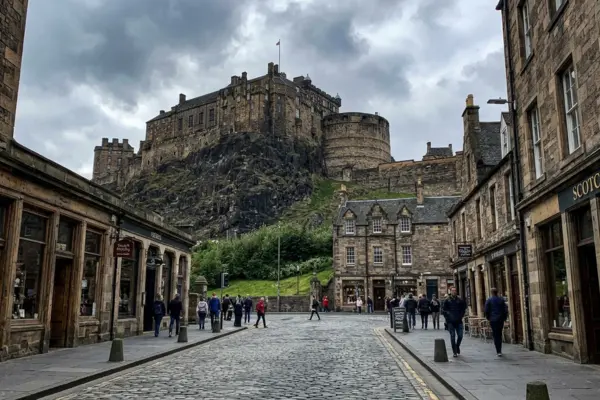
From the castle, the Royal Mile runs downhill toward the Palace of Holyroodhouse, and it’s less a single street than four connected ones stitched together: Castlehill, Lawnmarket, High Street, and Canongate. This is the spine of the Old Town, lined with closes, historic pubs, and a fair amount of tourist-trap tartan, but duck off the main drag into any of the narrow closes and you get a genuinely different, quieter version of the same street. Near the top, Gladstone’s Land is a restored 17th-century tenement house that gives you an actual sense of how a merchant family lived in Old Town Edinburgh four centuries ago, cramped stairwells and all, and it’s a useful stop for grounding the history before the rest of the walk. St Giles’ Cathedral sits about halfway down, recognizable by its crown-shaped spire, and the interior is worth the short stop even if you’re not usually a church-visiting traveler. A self-guided audio tour runs around £5.50 and adds real context to a building that’s been central to Scottish religious history since the 1100s.
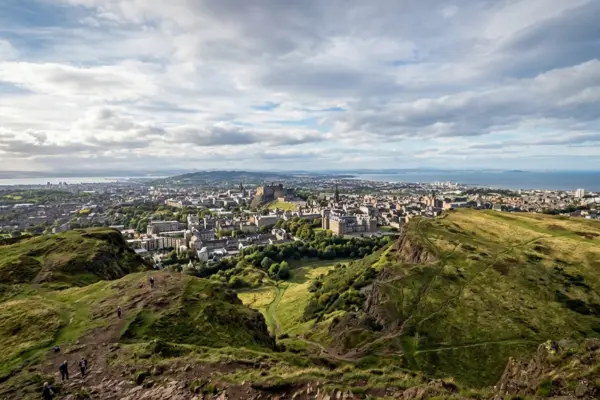
At the bottom of the Mile, the Palace of Holyroodhouse is the official Scottish residence of the British monarch and still used for state functions. Behind it, Arthur’s Seat rises out of Holyrood Park, another extinct volcano and the best free viewpoint in the city. The main path up is a genuine hike, roughly 45 minutes each way at a moderate pace, but it’s manageable in normal trainers and rewards you with a 360-degree view over the entire city and out to the Firth of Forth. Wear something wind-resistant even on a sunny day, the summit is exposed and noticeably colder than street level. Calton Hill, on the opposite side of the Old Town, gives a similar payoff for a fraction of the effort, a 10-minute climb to a cluster of monuments including that unfinished Parthenon replica, and it’s the better option if you’re short on time or mobility isn’t up for a full hike.
Edinburgh’s Best Museums and Galleries
The National Museum of Scotland is the one to prioritize if you only visit one museum, and it costs nothing to get in. The building itself is worth the visit, a soaring Victorian glass-roofed atrium called the Grand Gallery, but the collection is what makes it genuinely excellent: the Lewis Chessmen, a set of medieval chess pieces carved from walrus ivory, sit a few rooms from Dolly the Sheep, the first cloned mammal, preserved and on display. Give it two to three hours minimum, longer if you’re traveling with kids who’ll want the science and natural history floors.
The Scottish National Gallery, on The Mound between the Old and New Towns, holds a compact but serious collection, including significant Scottish portraiture and a strong run of European old masters. It’s small enough to see properly in an hour without gallery fatigue setting in. The Scottish National Portrait Gallery, a short walk away on Queen Street, leans harder into Scottish history and culture specifically, useful if the historical sections of this guide have you curious about the actual faces behind the names. The Writers’ Museum, tucked down a close off the Royal Mile, is a smaller stop dedicated to Robert Burns, Sir Walter Scott, and Robert Louis Stevenson, and it’s free.
For something with a stronger stomach for the strange, Surgeons’ Hall Museums near the university covers the history of surgery and anatomy in Edinburgh, a subject the city has an oddly rich history in thanks to its centuries-old medical school. It’s not for the squeamish, but it’s a genuinely different museum experience from the standard art-and-artifacts circuit, and it rarely shows up on the shorter tourist lists, which keeps it pleasantly uncrowded even in peak season.
Unique Edinburgh Experiences Worth the Splurge
The Scotch Whisky Experience, near the top of the Royal Mile, runs several tour tiers, from a straightforward Silver tour with one tasting to a Platinum tier with rarer pours. It’s touristy by design, but the barrel-ride introduction and the world’s largest scotch whisky collection on display make it a legitimate way to get a whisky education in an hour, especially useful if you’re heading to the Highlands afterward and want context for distillery visits there.
The Real Mary King’s Close takes you underground into a preserved 17th-century street that was built over and sealed when the City Chambers went up above it. Costumed guides lead you through, and it’s one of the more effective “history you can actually stand inside” experiences in the city, better for older kids and adults than very young children given some of the plague-era stories told along the way.
Greyfriars Kirkyard, just off Candlemaker Row, has become something of a pilgrimage site for two very different reasons. It’s the real resting place of Greyfriars Bobby, the loyal terrier whose statue sits right outside the gate, and it’s also widely believed to have lent several surnames, including one on a particularly memorable gravestone, to J.K. Rowling while she was writing Harry Potter nearby. Wander it in daylight for the headstones and the history, or join an evening ghost tour if you want the atmosphere turned up.
If you have a half day free, Rosslyn Chapel is a worthwhile trip about 30 minutes outside the city. Built in 1446, it’s covered in dense, strange carvings that have fueled centuries of speculation and, more recently, a starring role in The Da Vinci Code. You don’t need to buy into any of the theories to appreciate the stonework.
If castles and historic stonework are becoming a theme of your UK trip, it’s worth widening the search past Scotland. England alone has more than 1,500 documented castle sites, and our guide to the best castles in England is a solid next stop for planning that leg.
Top Edinburgh Attractions Compared
| Attraction | Cost | Time Needed | Best For |
| Edinburgh Castle | ££ | 2 to 3 hours | First-timers, history buffs |
| Royal Mile | Free to walk | 1 to 2 hours | Everyone, best done slowly |
| National Museum of Scotland | Free | 2 to 3 hours | Families, rainy days |
| Arthur’s Seat | Free | 2 to 3 hours round trip | Views, active travelers |
| Real Mary King’s Close | ££ | 1 hour | History buffs, unique experiences |
| Scotch Whisky Experience | ££ | 1 hour | Whisky curious, first-timers |
| Rosslyn Chapel (day trip) | ££ | Half day | Architecture lovers, Da Vinci Code fans |
Edinburgh’s Neighborhoods: Where to Explore
The Old Town is where most tourist time gets spent, and for good reason, but Edinburgh’s neighborhoods each have a distinct personality worth knowing before you plan your days.
Old Town is the medieval core: the castle, the Royal Mile, Grassmarket, and the closes branching off both. It’s dense, walkable, and loud in the best and worst senses, atmospheric at night but genuinely crowded during festival season and peak summer.
New Town, just across Princes Street Gardens, is the Georgian counterpoint: wide streets, symmetrical squares, and a noticeably calmer pace. George Street and Princes Street handle most of the shopping, while the residential squares like Charlotte Square show off the architecture the area is famous for.
Stockbridge, a 15-minute walk north of the New Town, feels like a small village that happens to sit inside a capital city. It’s where a lot of locals actually live, with independent cafes, a Sunday market, and the Water of Leith walkway running right through it. Good base for a second visit rather than a first one.
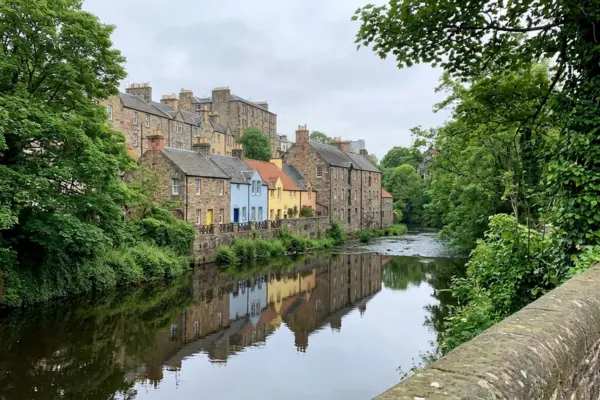
Dean Village, tucked into a steep gorge along the Water of Leith and easy to combine with a Stockbridge visit, looks more like a fairytale illustration than a functioning neighborhood in a capital city. It’s tiny, mostly residential, and one of the most photographed corners of Edinburgh precisely because so few first-time visitors know to look for it.
Leith, Edinburgh’s old port, has spent the last decade becoming the city’s most interesting food and drink neighborhood, with a tram line now connecting it directly to the city center. It’s a bit removed from the main sights, which keeps it calmer, and it’s where the Royal Yacht Britannia is docked.
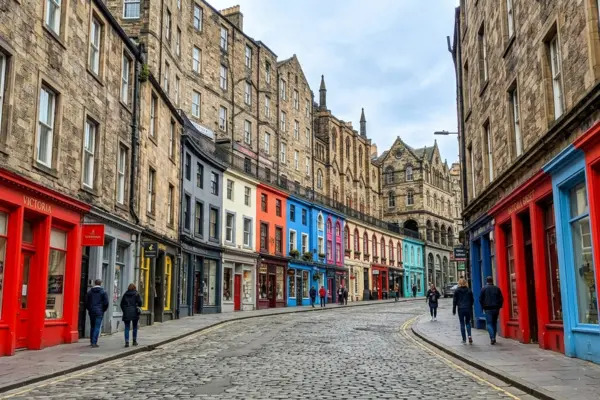
Grassmarket and Victoria Street, sitting just below the castle, blend into the Old Town but deserve a specific mention. Victoria Street’s curved, colorful shopfronts are one of the most photographed streets in the city and a widely cited inspiration for Diagon Alley, though J.K. Rowling has never confirmed that connection directly.
The Best Time to Visit Edinburgh
Edinburgh’s weather doesn’t swing as wildly as its reputation suggests, but it does shape which trip you should plan for.
Winters, December through February, run cold but rarely brutal. Average daytime highs sit around 8°C (46°F), dropping to lows near 2°C (36°F) overnight, with frost more common than snow. This is Hogmanay season, Edinburgh’s famous New Year celebration, and one of the only times you’ll see the city genuinely busy in winter. The main street party around Princes Street typically requires a ticket and sells out well in advance, so if that’s the draw for your trip, sort that out before you book flights, not after. December also brings Christmas markets to Princes Street Gardens, and daylight is short this time of year, the sun sets before 4pm around the winter solstice, which changes the rhythm of a day of sightseeing more than most visitors expect.
Spring, March through May, is a quiet, underrated window. Temperatures climb gradually into the 10-15°C (50-59°F) range, May is statistically the sunniest month of the year, and the crowds haven’t arrived yet. If dodging tour groups matters more to you than warm evenings, this is the stretch to book.
Summer, June through August, is peak season for a reason. Daytime highs reach 18-19°C (64-66°F), and thanks to Edinburgh’s northern latitude, daylight stretches to around 17 hours around the June solstice, with the sky still bright well past 10pm. August brings the Edinburgh Festival Fringe, the largest arts festival in the world, alongside the Edinburgh International Festival running at the same time. It’s also when hotel prices spike hardest and the Old Town gets genuinely packed, so book accommodation months ahead if you’re set on an August trip.
Autumn, September through November, splits the difference: mild temperatures easing down from summer, noticeably fewer crowds than August, and the best rates on accommodation outside of deep winter. Rainfall ticks up slightly, October is typically the wettest month, so pack accordingly.
Rain is a year-round possibility regardless of season. Edinburgh’s annual precipitation, around 950mm, is spread fairly evenly across the calendar rather than concentrated in one obvious wet season, so a compact umbrella belongs in your bag no matter when you go.
Quick take: May and June for the best weather-to-crowd ratio, August if the Fringe is the whole point of your trip, December for Hogmanay if you don’t mind the cold.
Where to Stay in Edinburgh
Where you base yourself depends more on what kind of trip you’re taking than on any single “best” neighborhood.
First-time visitors generally do best in the Old Town or right along its edge. You’ll be walking distance from the castle, the Royal Mile, and most of the landmark sights, which matters if you’re only in the city for two or three days and don’t want to burn time commuting to your own itinerary. The tradeoff is noise, especially on weekends and during the Fringe.
Return visitors or anyone prioritizing a quieter stay should look at the New Town or Stockbridge instead. You lose a few minutes of walking time to the major sights but gain a calmer evening, better parking options if you’ve got a car, and a more residential feel.
Festival-goers attending the Fringe in August need to book earlier than they think is necessary, often four to six months out, since Old Town accommodation sells out first and prices climb the closer you get to the dates. If you’re flexible, staying in Leith or the West End and taking the tram in keeps costs more reasonable during the festival’s peak weeks.
Budget-conscious travelers will generally find better value outside the immediate Old Town core, particularly around Haymarket or the West End, both still walkable to the center but priced more reasonably than anything directly on the Royal Mile.
On hotel versus Airbnb: Edinburgh’s New Town has an unusually large stock of Georgian townhouses converted into short-term rentals, which can be a genuinely nice way to experience the architecture from the inside rather than just walking past it, and often works out cheaper than a comparable hotel for groups splitting a larger flat. That said, the city has tightened short-term rental licensing in recent years, so stick to listings that clearly display a valid license number, both for legal reasons and because unlicensed listings have a track record of last-minute cancellations. If you’d rather not deal with that variable at all, a standard hotel or a serviced apartment gives you more predictable check-in and cancellation terms, which matters more during festival season when accommodation gets scarce fast.
Getting to and Around Edinburgh
By air: Edinburgh Airport, Scotland’s busiest, handles over 14 million passengers a year and connects directly to major hubs across the UK and Europe, along with a handful of North American routes. Most travelers coming from the US or Canada will still connect through London, Dublin, or another European hub, so factor a layover into your planning unless you’ve specifically found a direct route. The airport sits about 20 minutes from the city center by tram or bus.
By train: Edinburgh Waverley, right in the heart of the city, is the main station, with direct trains from London taking roughly four and a half hours. It’s a genuinely scenic route, particularly the stretch along the Northumberland coast, and for a lot of travelers it’s a more pleasant option than flying once you factor in airport time on both ends.
Getting around once you’re there: Lothian Buses run a reliable network across the city, and Edinburgh Trams connect the airport through the West End and city center out to Leith and Newhaven. The Old Town and New Town are both compact enough to walk between most major sights, and honestly, walking is how you’ll stumble onto the closes and viewpoints that don’t show up on a map. Uber operates in Edinburgh alongside local taxi firms, both reliable options late at night when buses thin out.
If you’re renting a car: don’t, at least not for the days you’re actually in the city. Edinburgh’s Old Town streets are narrow, largely one-way, and short on parking, and most of what you’ll want to see is walkable or a short tram ride away regardless. A rental car earns its cost once you’re heading out to the Highlands, Fife, or the Scottish Borders, so many visitors pick the car up on the day they leave Edinburgh rather than the day they arrive.
One thing to budget for: since October 2025, Edinburgh applies a 5% visitor levy on top of overnight accommodation costs. It’s a relatively new charge, so double-check how it’s itemized when you book, since implementrioritizes the essentials without trying to cram in more than a normal person can actually enjoy in three days. Each day is built around one part of the city rather than bouncing back and forth, which cuts down on backtracking and gives you a natural rhythm: Old Town energy on day one, calmer New Town pace on day two, and open air on day three before you either head home or continue on to the rest of Scotland.
Day 1: Old Town and the Castle
Today covers the postcard version of Edinburgh, and it’s worth doing on day one while your energy is highest, since it involves the most walking on uneven, sloped ground.
- Book Edinburgh Castle tickets online in advance and arrive right at opening to beat the tour bus crowds
- Walk the Royal Mile downhill, ducking into at least two or three closes along the way rather than sticking to the main strip
- Stop at Gladstone’s Land for a look at 17th-century Old Town living, then St Giles’ Cathedral a few minutes further down, audio guide optional but worthwhile
- Lunch anywhere on or just off the Mile, Grassmarket has better options than the main tourist strip
- Spend the afternoon at either the Real Mary King’s Close or the Scotch Whisky Experience, both run close to an hour and book up in the afternoons during summer
- Explore Greyfriars Kirkyard in the late afternoon light
- Dinner and drinks in Grassmarket to end the day where the Old Town feels most alive at night
Day 2: New Town and the Galleries
Slower pace today, flatter ground, and a good day to build in a proper lunch rather than eating on the move.
- Morning coffee and a walk through Princes Street Gardens
- Visit the Scottish National Gallery, it’s small enough to do properly in an hour, then the Scottish National Portrait Gallery a short walk away if you want more
- Walk the New Town’s Georgian streets, George Street and Charlotte Square in particular
- Detour to Dean Village and Stockbridge if you have the energy, it’s about a 20-minute walk from the New Town core and one of the better photo stops in the city
- Late afternoon at the National Museum of Scotland, two hours minimum if you want to see the Lewis Chessmen and Dolly the Sheep without rushing
- Sunset climb up Calton Hill, it’s short and the payoff is one of the best views in the city
- Dinner in the New Town or Stockbridge for a change of pace from Old Town crowds
Day 3: Arthur’s Seat and a Day Trip
Your last day, built around fresh air in the morning and flexibility in the afternoon depending on your energy and the weather.
- Early hike up Arthur’s Seat before the day gets warm, allow about 90 minutes round trip at an easy pace, and bring a windbreaker even if it’s sunny at the bottom
- Breakfast or brunch near Holyrood Park afterward
- Afternoon day trip to Rosslyn Chapel, about 30 minutes each way by bus or taxi, and worth booking the guided tour slot in advance during summer weekends
- Alternative if chapels aren’t your thing: head to Leith instead for a slower afternoon, a walk along the water, and dinner near the docks where the Royal Yacht Britannia is moored
- If you’re extending your trip rather than flying home, this is also the natural point to pick up a rental car for the Highlands or Fife
If Edinburgh is one leg of a longer Europe trip rather than the whole vacation, it’s worth mapping out the rest before you book flights home. Our 14-day Italy itinerary is built with the same day-by-day structure and pairs well as a second stop.
Edinburgh, Scotland: Frequently Asked Questions
Is Edinburgh in Scotland?
Yes. Edinburgh is the capital city of Scotland, located on the country’s east coast. It is not in England, though it’s a relatively short flight or train ride from London, about two hours by air or four and a half hours by rail.
What is Edinburgh best known for?
Edinburgh is best known for Edinburgh Castle, the historic Old Town and Royal Mile, and the Edinburgh Festival Fringe, the largest arts festival in the world, held every August. Its Georgian New Town and deep literary history, from Robert Louis Stevenson to J.K. Rowling, add to the reputation.
How many days do you need in Edinburgh?
Three days is enough to see Edinburgh’s major sights properly without rushing: one day for the Old Town and castle, one for the New Town and museums, and one for Arthur’s Seat plus a day trip. Two days works if you’re tight on time, and five or more lets you add the Highlands or a longer Fife excursion. The same “how many days do you actually need” question comes up constantly in trip planning. We break it down the same way for Cinque Terre if that’s also on your Europe list.
What time zone is Edinburgh in?
Edinburgh runs on GMT (UTC+0) in winter and British Summer Time (UTC+1) from late March to late October, the same time zone as the rest of the United Kingdom.
Is Edinburgh Castle worth the walk up?
Yes, for most visitors. The walk itself is short, just a steady incline from the Esplanade, and the castle houses the Scottish Crown Jewels, the Stone of Destiny, and St Margaret’s Chapel, the oldest surviving building in the city. Go early to avoid the worst of the crowds.
Does Edinburgh have a tourist tax?
Yes. Since October 2025, Edinburgh has applied a 5% visitor levy on overnight accommodation stays. Check how your specific booking itemizes it, since the charge is still relatively new and implementation can vary between properties.
Edinburgh rewards travelers who slow down enough to actually look at it. The postcard shots of the castle and the Royal Mile are worth getting, but the city’s real character shows up in the closes off the main streets, the view from Calton Hill at sunset, and a quiet morning in Dean Village before the day-trippers arrive.
Most visitors leave wishing they’d built in one more day, usually because the city’s compact size tricks people into underestimating how much is packed into it. If your schedule allows any flexibility at all, err toward more time rather than less, especially if an August trip means the Fringe is running while you’re there. Whether you’ve got three days or ten, Edinburgh, Scotland gives you enough history, food, and walkable neighborhoods to fill every one of them without ever feeling like you’re padding an itinerary. Book the castle tickets ahead, pack for rain regardless of the season, and the rest of the trip tends to take care of itself.
Related Posts
Castles in England: 50+ Best Castles to Visit in 2026
England is home to one of the richest castle landscapes anywhere in the world. Historians…

Split to Hvar Town 4 Ferry Companies Comparison and Duration
If you are planning a trip from Split to Hvar Town, the first thing you…
Perfect time to visit Village of Èze France Travel Guide 2026
Village of Èze France is one of the most dramatic stops on the French Riviera,…