
Castles in England: 50+ Best Castles to Visit in 2026
England is home to one of the richest castle landscapes anywhere in the world. Historians have catalogued more than 1,500 castle sites across the country, and today roughly 800 still have visible remains, ranging from grassy earthworks to fully intact royal residences. The most famous is Windsor Castle in Berkshire, the oldest and largest occupied castle on earth and still a working royal residence. Beyond Windsor, England’s castles span nine centuries of history, from the wooden Norman forts thrown up after 1066 to Victorian country houses built purely for show. This guide to castles in England covers the best ones to visit, a region-by-region map, the real history behind why the Normans built so many, and where you can visit, stay overnight, or even buy one.
Castles in England at a Glance
- Total castle sites recorded: over 1,500, many now reduced to earthworks or vanished entirely
- Castles with visible remains today: around 800
- Oldest surviving structure: the White Tower at the Tower of London, begun around 1078
- Largest occupied castle: Windsor Castle, Berkshire
- County with the most castles: Northumberland, a legacy of centuries of border conflict with Scotland
- Open to the public: several hundred, managed by English Heritage, the National Trust, or private owners
The Best Castles in England to Visit
Narrowing thousands of sites down to a shortlist isn’t easy, but a handful of castles stand out for their history, their setting, or simply how well they’ve survived. Below is a working list of the best castles in England to visit, followed by a category breakdown if you’re after something specific, whether that’s the most beautiful, the best-preserved ruin, or the best family day out.
The Top 12 Must-Visit Castles in England
- Windsor Castle, Berkshire: Windsor is the largest and oldest occupied castle in the world, founded by William the Conqueror in the 11th century and still used regularly by the King. The State Apartments hold masterpieces from the Royal Collection, and St George’s Chapel is the burial place of ten monarchs, including Henry VIII. Standard adult tickets run around £30 to £35, and it gets busy in summer, so book online ahead of your visit.
- Tower of London, London: The White Tower at its centre was begun around 1078 by William the Conqueror, making it one of the oldest surviving buildings in the city. Today the complex houses the Crown Jewels and centuries of grim history, from royal prisoners to public executions. The Yeoman Warders, known as Beefeaters, run guided tours included with admission.
- Warwick Castle, Warwickshire: Warwick started life as a wooden fort built by William the Conqueror in 1068 and grew into one of England’s grandest medieval fortresses. It now leans into family entertainment, with jousting, a working trebuchet, and 64 acres of grounds to explore. It’s one of the more commercial castle visits on this list, but the scale of the place still impresses.
- Dover Castle, Kent: Nicknamed the Key to England for its position above the Channel, Dover was built by Henry II in the 12th century on a site with much older Roman and Anglo-Saxon fortifications. Its secret wartime tunnels, dug into the cliffs, served as a command centre during the Second World War and are one of the most memorable parts of any visit.
- Leeds Castle, Kent: Often nicknamed the loveliest castle in the world, Leeds sits across two small islands on a lake and dates back to 1119. It passed through the hands of several medieval queens before Henry VIII added his own touches, and today it’s one of the most photographed castles in England.
- Alnwick Castle, Northumberland: Home to the Duke of Northumberland, Alnwick is best known to modern visitors as a filming location for the early Harry Potter films, including the flying lessons scenes. Beyond the film connection, it’s a genuinely important medieval fortress with grand state rooms and extensive gardens.
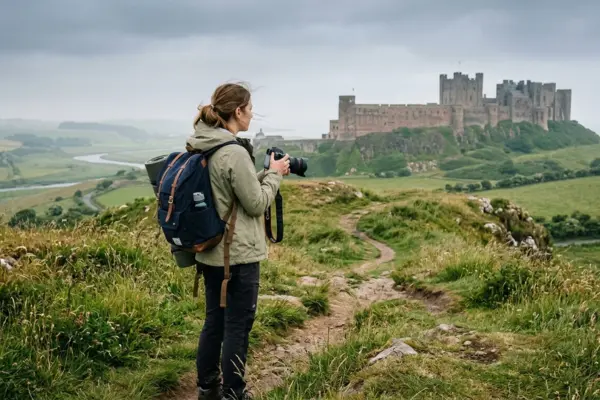
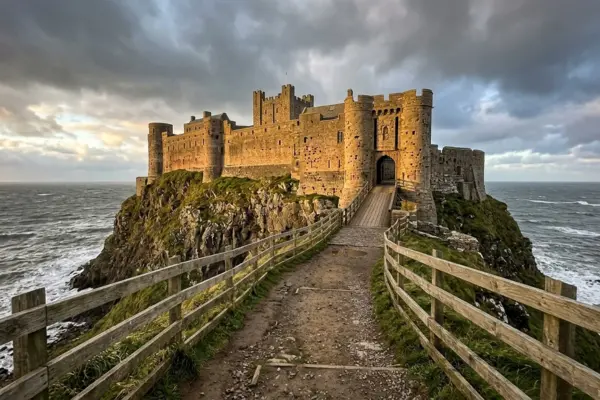
- Bamburgh Castle, Northumberland: Perched on a cliff above the North Sea, Bamburgh’s history stretches back to Anglo-Saxon times, when it served as the seat of the Kings of Northumbria. The Normans rebuilt it after Viking raids, and its current form dates largely from a major Victorian restoration. Few castles in England have a more dramatic coastal setting.
- Bodiam Castle, East Sussex: Built in 1385 by Sir Edward Dalyngrigge, Bodiam is close to the platonic ideal of a medieval castle, complete with a full moat, round corner towers, and a working portcullis. Now cared for by the National Trust, it’s one of the best-preserved examples of a fortified medieval residence in the country.
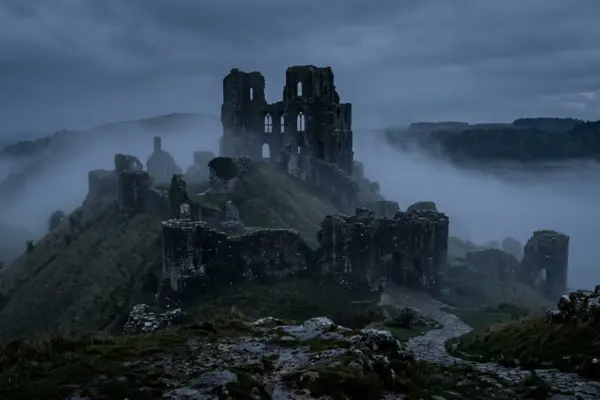
- Corfe Castle, Dorset: Perched on a steep hill in the Purbeck Hills, Corfe was besieged twice during the English Civil War before being deliberately demolished by Parliament in 1646. What remains is a dramatic, broken silhouette that’s become one of the most photographed ruins in southern England.
- Arundel Castle, West Sussex: Founded by Roger de Montgomery in 1067, Arundel has been the seat of the Duke of Norfolk for over 400 years and remains a working family home. The State Rooms are packed with fine art and furniture, and the grounds include one of the best-preserved medieval keeps in the country.
- Hever Castle, Kent: Best known as the childhood home of Anne Boleyn, Hever combines a genuine 13th-century core with later Tudor additions from the Boleyn family. The gardens, including a water maze, are as much a reason to visit as the castle itself.
- Durham Castle, County Durham: Built shortly after the Norman Conquest and continuously occupied since around 1072, Durham Castle now forms part of Durham University and houses students within its medieval walls. Paired with Durham Cathedral next door, it’s a joint UNESCO World Heritage Site and one of the best surviving examples of early Norman architecture in England.
Best Castles in England by Category
If you’re planning around a specific interest rather than working through a general list, this breakdown might be more useful.
| Category | Castle | Why It Wins |
| Best royal residence | Windsor Castle | Still an official royal residence and the largest occupied castle in the world |
| Most beautiful or romantic | Leeds Castle | Set across two islands on a lake, often called the loveliest castle in the world |
| Best-preserved medieval castle | Bodiam Castle | Near-complete exterior with towers, battlements and a full moat |
| Best for families | Warwick Castle | Live shows, a working trebuchet, and 64 acres of grounds |
| Best ruin for atmosphere | Corfe Castle | A dramatic hilltop ruin with a violent Civil War history |
| Best for Tudor history | Hever Castle | Childhood home of Anne Boleyn, with her own prayer book on display |
Map of Castles in England by Region
England’s castles cluster heavily in a few regions, largely for the same defensive reasons they were built in the first place. If you’re planning a trip rather than reading about castles in the abstract, it makes more sense to pick a region and work outward than to try to cover the whole country at once.
The South East, particularly Kent and Sussex, has the highest concentration of castles accessible from London, including Dover, Leeds, Hever, Bodiam and Arundel. The North East, especially Northumberland, is widely regarded as having more castles than any other English county, a direct legacy of centuries of conflict with Scotland; Alnwick, Bamburgh and Warkworth all sit within a short drive of each other. Yorkshire and County Durham add Durham Castle, Richmond Castle and Scarborough Castle to the mix. The Midlands centres on Warwickshire, home to both Warwick and Kenilworth castles. Further east, Suffolk holds some of the country’s best-preserved coastal fortifications, including Framlingham and Orford, and pairs well with a longer trip through the wider county, covered in more depth in our guide to Suffolk, England.
| Region | Notable Castles | Key Counties |
| London | Tower of London | Greater London |
| South East | Dover, Leeds, Hever, Bodiam, Arundel | Kent, East Sussex, West Sussex |
| South West | Corfe Castle | Dorset |
| East of England | Framlingham, Orford | Suffolk |
| Midlands | Warwick, Kenilworth | Warwickshire |
| North West | Lancaster, Carlisle | Lancashire, Cumbria |
| North East | Alnwick, Bamburgh, Durham, Warkworth | Northumberland, County Durham |
| Yorkshire | Richmond, Scarborough, Middleham | North Yorkshire |
The History of England’s Castles
Understanding why England ended up with so many castles, and why they were built the way they were, makes visiting them a lot more interesting than just walking through empty rooms.
Why the Normans Built So Many Castles in England
When William the Conqueror invaded in 1066, he had a problem. His army was small compared to the population he now controlled, and Anglo-Saxon England had already shown it could organize resistance. Castles solved this quickly. A motte and bailey castle, essentially an earth mound topped with a wooden tower and an enclosed courtyard, could be built in a matter of weeks using local labour and materials. Within a decade of the conquest, hundreds had gone up across the country, each one letting a small Norman garrison dominate the surrounding land, collect taxes, and respond fast to any uprising. They weren’t just military tools either. A castle looming over a town was a constant, visible reminder of who was now in charge. That combination of quick construction, easy defence, and impossible-to-ignore presence is the main reason castles spread across England so fast in the years after 1066, and why so many towns still have one at their centre today.
How Castle Architecture Evolved: Motte and Bailey to Stone Fortress
The earliest Norman castles were wood and earth, fast to build but vulnerable to fire and rot. Over the following century, the more important sites were rebuilt in stone, starting with a central keep, a strong, tall tower that served as the last line of defence, and later expanding to include a full curtain wall around the outer courtyard. The White Tower at the Tower of London is one of the earliest examples built in stone from the start rather than upgraded later. By the late 13th century, castle design had reached its peak of sophistication, with concentric layouts like Dover Castle using multiple rings of walls to slow down any attacker. After that, castle building genuinely declined. Cannon and artillery made traditional stone walls far less effective, and the shift away from feudalism meant fewer lords needed a private fortress at all. Many were replaced by lightly fortified manor houses instead, built more for comfort than defence.
From Fortress to Family Home: Castles Today
Almost none of England’s castles still serve a military purpose. Many were deliberately demolished, or “slighted,” after the English Civil War in the 1640s to stop them being used again as strongholds, which is why so many ruins across the country share a similarly broken, one-sided look. Others survived by adapting. Windsor, Arundel and Alnwick are still lived in by the families or institutions that have held them for centuries, while hundreds more are now run as museums, wedding venues, or tourist attractions by English Heritage, the National Trust, or private trusts. A handful, covered later in this guide, have gone a step further and become working hotels.
Haunted and Abandoned Castles in England
Not every castle in England survives as a polished visitor attraction, and not every visit is about admiring architecture in daylight. Plenty of castles are more interesting for what was lost, or for what’s said to linger.
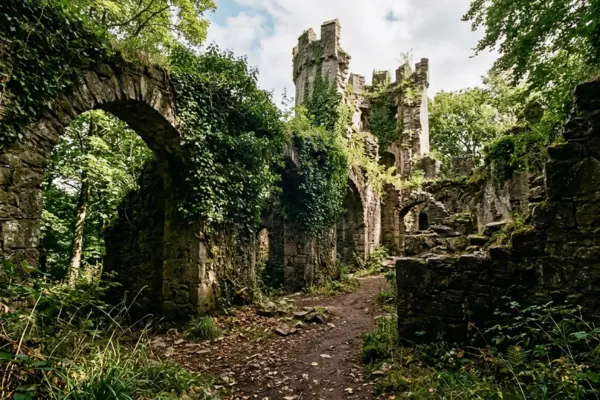
Ruined and abandoned castles tend to share a similar story: sieged, deliberately demolished, or simply abandoned once they stopped being useful. Kenilworth Castle in Warwickshire was partly destroyed by Parliamentary forces in 1649 to prevent it being used as a stronghold again, leaving one of the most substantial ruins in the Midlands. Corfe Castle met the same fate in Dorset in 1646, its shattered towers now leaning at angles that look almost deliberate. Hadleigh Castle in Essex fell apart more slowly, undermined by the unstable London clay it was built on, and was eventually sold off for building materials in the 16th century rather than destroyed by force. These abandoned sites tend to be free or low cost to visit, since there’s often little left to maintain beyond the ruins themselves.
The haunted reputation attached to several English castles is harder to verify but impossible to ignore if you’re planning a trip around the theme. The Tower of London has centuries of ghost stories attached to it, most famously the headless ghost of Anne Boleyn, said to walk the site of her execution. Berry Pomeroy Castle in Devon is reputed to be one of the most haunted castles in Britain, with tales stretching back generations. Muncaster Castle in Cumbria has long been associated with the ghost of a jester said to haunt its tapestry room, while Bolsover Castle in Derbyshire carries its own reputation as one of the country’s most haunted sites. Several tour operators now run dedicated haunted castle tours around Halloween, combining the history with the folklore for visitors who want more than a straightforward daytime visit.
Castles You Can Visit, Stay In or Buy
Most people researching castles in England fall into one of three groups: day-trip visitors, people looking for something more memorable than a standard hotel, and a much smaller group actually considering buying one. Each has a different starting point.
Castles You Can Visit Today
The majority of England’s publicly accessible castles are managed by English Heritage or the National Trust, and access varies a lot by site. Some, mostly earthworks and smaller ruins, have free open access at any reasonable time with no ticket required. Larger, better-preserved sites like Windsor, Warwick, Leeds and Dover charge admission and benefit from booking online in advance, both for guaranteed entry and often a lower price than paying on the day. Privately owned castles such as Arundel, Alnwick and Hever tend to have more restricted opening seasons, often closing over winter entirely, so it’s worth checking specific dates before building a trip around them.
Castle Hotels: Where You Can Actually Sleep in a Castle
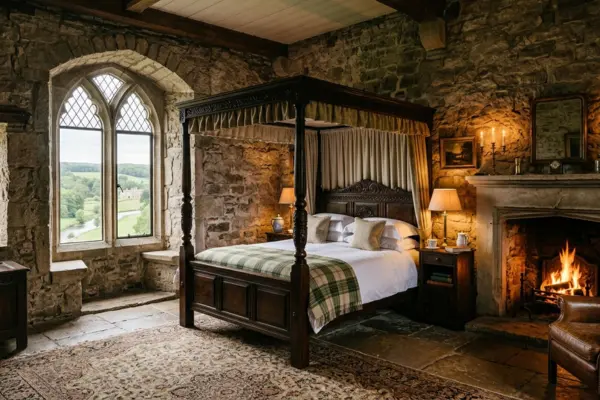
A small number of English castles now operate as hotels, and staying overnight is a genuinely different experience from a day visit. Thornbury Castle in Gloucestershire, a genuine Tudor building once briefly home to Henry VIII, is probably the best known. Lumley Castle in County Durham and Langley Castle in Northumberland both offer four-poster beds and thick stone walls without straying too far from major towns, while Amberley Castle in West Sussex and Dalston Hall in Cumbria round out the list. Expect prices well above a standard hotel room for the novelty and setting, and book turret or feature rooms early, since there are usually only one or two per property.
Castles in England For Sale
The market for castles is small and highly specialized. Most surviving castles carry Grade I or Grade II listed status, which means strict planning restrictions apply to almost any change, inside or out. Prices vary enormously depending on condition and how much is actually habitable, from a few hundred thousand pounds for a roofless ruin with no services to several million for a fully restored, liveable property with land. Specialist estate agents who deal specifically in listed and historic buildings are a far better starting point than general property portals if you’re seriously exploring this route.
Planning Your Castle Visit: A Quick Checklist
- Book ahead for major sites: Windsor, Warwick, Leeds and Dover all benefit from online booking, both for guaranteed entry and often a lower ticket price than paying at the gate.
- Check opening days before you travel: Smaller and privately owned castles frequently close midweek, or entirely over winter.
- Wear proper footwear: Spiral stone staircases, uneven cobbles and steep motte climbs are the norm, not the exception.
- Allow at least half a day for larger sites: more if the grounds or gardens are included in your ticket.
- Group nearby castles into one trip where possible: Kent especially rewards a multi-castle day, with Dover, Leeds and Hever all within reasonable driving distance of each other.
- Consider an English Heritage or National Trust membership: if you’re visiting more than three or four sites, since it usually pays for itself quickly.
- Carry a card and some cash. Not every smaller, independently run site accepts contactless payment.
- Check for family activities in advance: if you’re visiting with kids. Many castles run dressing-up sessions, trails or app-based quests that need to be booked separately.
- Pack a layer regardless of the season: Stone castles hold the cold, even on a warm day outside.
Frequently Asked Questions About Castles in England
How many castles are there in England?
Historians have identified more than 1,500 castle sites across England, though many exist only as earthworks or have vanished completely. Around 800 castles still have visible remains today, and roughly 300 of those retain substantial stone or brick structure worth a visit.
How many medieval castles are there in England?
Most of the roughly 800 castles with visible remains date from the medieval period, built between the Norman Conquest in 1066 and the early 1500s. The true number that once existed was almost certainly higher, since many early timber castles left no trace once abandoned.
How many royal castles are in England?
Only one castle in England remains in regular royal use today: Windsor Castle in Berkshire. The King’s other official residences, including Buckingham Palace and the Palace of Holyroodhouse in Edinburgh, aren’t classified as castles in the traditional sense.
Which county in England has the most castles?
Northumberland is widely regarded as having more castles than any other English county, a direct result of centuries spent defending the border against Scottish raids. Alnwick, Bamburgh, Warkworth and Dunstanburgh are among the best known survivors.
What castles can you stay in overnight in England?
A number of historic castles now operate as hotels, including Thornbury Castle in Gloucestershire, Lumley Castle in County Durham and Langley Castle in Northumberland. Expect four-poster beds, thick stone walls, and prices well above a standard hotel room.
Why are there so many castles in England?
Most of England’s castles were built in the decades following the Norman Conquest of 1066, when William the Conqueror needed a fast, effective way to control a much larger population with a relatively small invading force. Castles let small garrisons dominate wide areas of land quickly and visibly.
England’s castles reward slow travel more than a checklist approach. Pick a region rather than trying to see everything at once, build in time to actually wander the grounds rather than rushing between ticket gates, and don’t skip the smaller, free-access ruins just because they don’t have a gift shop. Some of the best castles in England are the ones nobody’s rushing to see.
Related Posts
Split to Hvar Town 4 Ferry Companies Comparison and Duration
If you are planning a trip from Split to Hvar Town, the first thing you…
Perfect time to visit Village of Èze France Travel Guide 2026
Village of Èze France is one of the most dramatic stops on the French Riviera,…

Sugar Beach Reviews St Lucia: Honest Cost, Luxury Villas And Experiences Guide 2026
Why Sugar Beach Should Be on Your Bucket List From the moment I arrived at…